

The leaders of the United States, China and Russia convene in southern China for unprecedented direct talks on global security and economic stability.
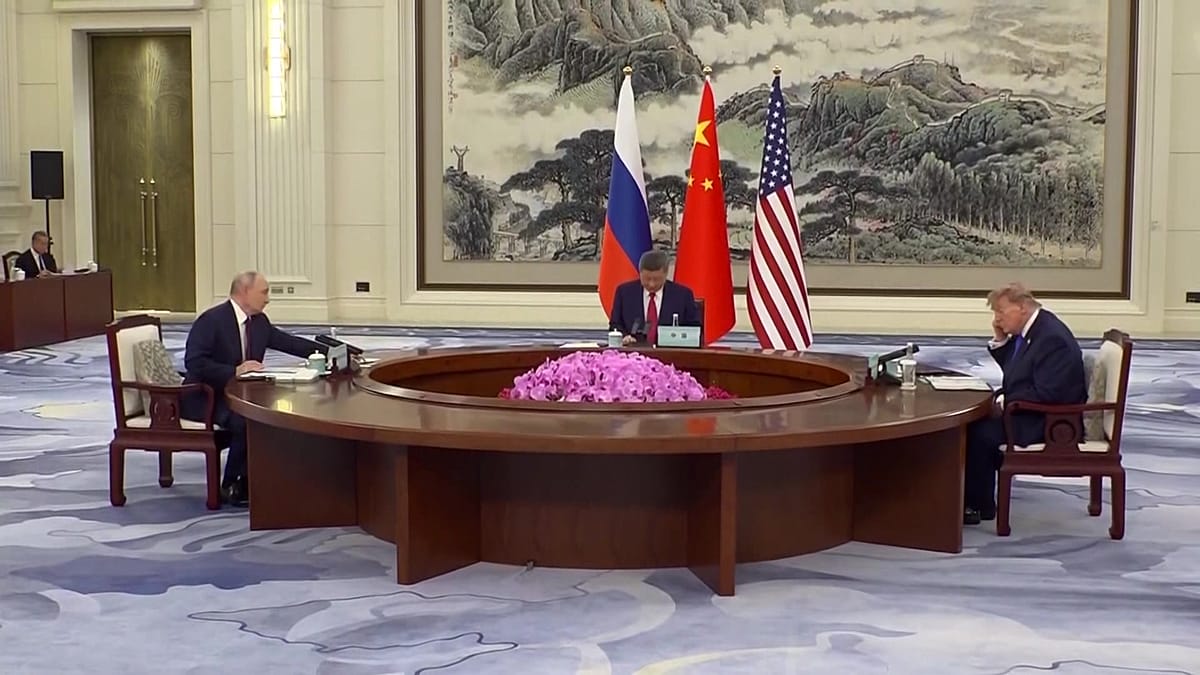
The presidents of the United States, China and Russia have opened their first-ever trilateral summit in Shenzhen, China. The meeting marks a historic diplomatic milestone as the three permanent members of the United Nations Security Council engage in direct dialogue. Discussions are expected to cover strategic stability, regional conflicts, trade relations and multilateral cooperation. The summit is being closely watched by governments and international institutions worldwide.
The leaders of the United States, China and Russia have begun their first-ever trilateral summit in Shenzhen, China, opening a new chapter in direct engagement among three of the world's most influential governments. President Donald Trump of the United States, President Xi Jinping of China and President Vladimir Putin of Russia are meeting face-to-face in the southern Chinese technology hub. The gathering represents the first time these three heads of state have convened together for formal talks. Observers describe the summit as a significant diplomatic event with potential implications for international security and economic coordination.
The meeting takes place against a backdrop of complex bilateral relationships and competing strategic interests among the three nations. As permanent members of the United Nations Security Council, the United States, China and Russia hold substantial influence over global peace and security matters. Institutional analysts note that direct trilateral dialogue could reshape approaches to conflict resolution, arms control and trade policy. The summit is being monitored closely by foreign ministries, international organizations and capital markets around the world.
Key Highlights & Verified Facts
- The summit is the first-ever trilateral meeting between the heads of state of the United States, China and Russia.
- The talks are being held in Shenzhen, China, a major technology and financial center in Guangdong province.
- All three leaders are permanent members of the United Nations Security Council with veto authority.
- The agenda is expected to include strategic stability, regional security, trade and multilateral cooperation.
- The meeting is occurring on November 19, 2026, and is drawing attention from governments and international institutions globally.
Diplomatic Significance of the Trilateral Format
The decision to hold a three-way summit reflects an effort to move beyond traditional bilateral frameworks and address shared challenges through direct multilateral engagement. Diplomatic officials from the participating governments have described the format as an experiment in high-level coordination among states with differing political systems and strategic priorities. The presence of all three United Nations Security Council permanent members in one room underscores the potential for collective influence on international norms and conflict management.
Analysts note that trilateral talks could help reduce miscalculation by establishing direct communication channels between the capitals of Washington, Beijing and Moscow. While the summit does not replace existing bilateral relationships, it creates a venue for discussing issues that affect all three powers simultaneously. The format may also signal a willingness to manage competition through dialogue rather than confrontation, though officials have cautioned that meaningful outcomes will depend on sustained follow-up.
Strategic Stability and Security Discussions
Security matters are expected to feature prominently in the talks, including arms control, missile technology and regional flashpoints. Government representatives have indicated that the leaders may discuss measures to reduce the risk of military escalation in sensitive areas. The three nations maintain substantial nuclear arsenals and advanced conventional forces, making their coordination on stability issues relevant to global security architecture.
Regional conflicts involving the interests of the United States, China and Russia are likely to be addressed during the closed-door sessions. Officials from the participating countries have emphasized the importance of preventing misunderstandings that could lead to broader confrontations. While no formal agreements have been announced in advance, diplomatic sources suggest the summit could produce joint statements or confidence-building measures if the discussions proceed constructively.
Economic and Trade Dimensions
Economic relations between the three powers are characterized by deep interdependence alongside significant friction over trade practices, investment restrictions and technology access. The summit provides an opportunity for the leaders to discuss supply chain resilience, market access and financial stability. Trade officials from the United States, China and Russia have been preparing background materials on tariff policies, export controls and currency matters.
Business leaders and economic institutions are monitoring the summit for signals about future trade policy directions. Any indication of cooperation on economic issues could affect commodity markets, investment flows and multinational corporate planning. However, government representatives have stressed that economic discussions will take place within the context of national security considerations and domestic regulatory frameworks.
Technology and Innovation Cooperation
Technology policy is emerging as a central theme, with the three nations competing in areas such as artificial intelligence, semiconductors and telecommunications. The summit may address standards development, research collaboration and the governance of emerging technologies. Officials have acknowledged that technological leadership carries implications for economic competitiveness and national defense.
Discussions on technology could include proposals for managing risks associated with advanced systems while preserving innovation ecosystems. The three governments maintain different regulatory approaches to data privacy, cybersecurity and digital infrastructure. Any common ground established at the summit could influence international technology standards and cross-border digital commerce in the coming years.
Institutional and Multilateral Implications
The summit occurs within the broader context of the United Nations system and other multilateral institutions where the three powers hold voting rights and veto authority. Diplomatic observers suggest that trilateral coordination could affect decision-making in the Security Council, the World Trade Organization and regional security forums. The meeting may also influence how the three nations approach climate finance, development assistance and humanitarian coordination.
International organizations are assessing whether the summit will lead to more consistent positions on global issues or simply reflect temporary alignment on specific topics. Government officials have emphasized that the talks are exploratory and do not constitute a formal alliance. The long-term institutional impact will depend on whether the leaders establish mechanisms for continued engagement beyond this single meeting.
Key Developments & Breakdown
Official Statements & Institutional Response
Government officials from the participating countries have described the summit as an important opportunity for direct dialogue among major powers. Diplomatic representatives have emphasized that the talks are exploratory and do not constitute a formal alliance or binding agreement.
Background & Historical Context
Relations among the United States, China and Russia have evolved through decades of competition, cooperation and confrontation. The three nations emerged as principal actors in the post-World War II international order and became permanent members of the United Nations Security Council with veto authority. During the Cold War, the United States and the Soviet Union led opposing blocs while China pursued an independent foreign policy after the 1970s rapprochement with Washington. In the post-Cold War era, the relationship among the three powers grew more complex as China's economic rise altered global trade and security dynamics. Bilateral tensions have periodically flared over trade practices, territorial disputes, military activities and technology competition. Despite these differences, the three countries have occasionally cooperated on issues such as nuclear non-proliferation, climate change and counterterrorism through multilateral forums.
Broader Impact & Strategic Implications
The summit's economic implications extend to global markets, where investors are watching for signals about trade policy, sanctions and investment rules. Coordinated positions among the United States, China and Russia could affect commodity prices, currency stability and supply chain configurations. Business leaders are assessing whether the meeting will produce predictable frameworks or increase uncertainty for multinational corporations operating across these jurisdictions. Geopolitically, the trilateral format could reshape how regional conflicts are managed and how major powers communicate during crises. Direct dialogue among the three nuclear-armed states may reduce the risk of miscalculation, though analysts caution that deep structural differences will not disappear overnight. The summit's outcome may influence the behavior of smaller states and the functioning of international institutions in the months ahead.
Frequently Asked Questions
Why is this summit considered historic?
This is the first time the leaders of the United States, China and Russia have met together for formal trilateral talks. All three are permanent members of the United Nations Security Council, making their direct engagement a rare diplomatic event.
Where is the summit taking place?
The summit is being held in Shenzhen, China, a major technology and financial center in Guangdong province. The city was selected as the venue for the three-way talks.
What topics are being discussed?
The agenda includes strategic stability, regional security, trade relations, technology governance and multilateral cooperation. Officials have indicated that discussions may also cover arms control and economic coordination.
Will the summit produce binding agreements?
Government representatives have described the talks as exploratory and have stated they do not constitute a formal alliance. Any outcomes will depend on the progress of discussions and subsequent follow-up by the participating governments.
What Happens Next
The Shenzhen summit represents a significant moment in contemporary international relations, offering a platform for direct engagement among three powers that shape much of the global agenda. Whether the meeting produces concrete agreements or primarily serves as a confidence-building exercise, its occurrence signals a willingness to address shared challenges through dialogue. Observers will be watching for joint statements, follow-up mechanisms and any shifts in the tone of official communications from Washington, Beijing and Moscow. Looking ahead, the long-term trajectory of trilateral cooperation will depend on sustained political will and the ability to manage deep-seated differences. Future milestones may include additional summits, working-level consultations or coordinated positions in multilateral institutions. For now, the international community awaits the results of the discussions and their potential impact on global security, trade and technology governance.
Topics: Trilateral Summit, Shenzhen, United States, China, Russia, Global Affairs
Original in-depth reporting by DEVCART LIVE Editorial Desk · Built by DevCart Technologies
Reader Discussion (0)
Community ForumContribute perspectives, technical analysis, or questions below.