

Earthquakes Explained: The Complete Guide to Causes, Seismic Waves, Magnitude Scales, Global Zones and Survival Safety
Beneath the ground we step on each day, the Earth moves constantly and strongly. An earthquake is a harsh shaking of the Earths surface that happens when stored mechanical stress inside the Earths outer layer, called the lithosphere, is released quickly. Many people think of earthquakes as huge disasters, but the Earth actually feels tremors almost all the time—every few seconds a seismic sensor somewhere records the shifting crust.
Knowing how Earthquakes form, how scientists measure their energy, which regions face the risk and exactly what to do during the critical seconds of shaking can mean the difference between panic and survival. This complete guide explains the science of seismology, past big Earthquakes, modern early‑warning systems and a clear safety checklist for homes, offices and communities.
Quick Executive Summary
- Root Cause: Earthquakes occur when slowly moving tectonic plates catch along rough fault lines, build up huge pressure over decades or centuries and then snap free suddenly.
- Measurement: Modern seismologists use the Moment Magnitude Scale (Mw) to calculate energy release and the Modified Mercalli Intensity (MMI) scale to measure the real ground shaking and damage.
- Golden Safety Rule: When the Earthquake shakes inside, immediately do Drop, Cover and Hold On—do not run outside. Stand in doorways.
1. What Causes an Earthquake? Plate Tectonics & Fault Lines
Earths outermost layer is not one unbroken piece of solid rock. Instead, it is split into 15 major and many minor interlocking slabs called tectonic plates—including the Pacific, Eurasian, Indian, North American, African, Antarctic and South American plates. Driven by heat convection inside the Earths mantle, these big slabs move all the time at speeds from 2 to 10 centimeters per year (about the same speed as human fingernails grow).
While the inside of plates moves smoothly, their sharp edges rub against neighboring plates along fractures called faults. Because rock surfaces are rough, friction holds the fault tightly as the rest of the plates keep pushing. This makes the surrounding crust bend and deform like a stretched rubber band—a process geologists call the Elastic Rebound Theory.
Eventually, the stored stress becomes greater than the friction keeping the rocks together. In a moment, the fault breaks, the rock snaps back to an unstressed position and decades of stored elastic strain spreads out as strong seismic waves.
The Three Main Types of Tectonic Plate Boundaries
Convergent Boundaries
Two plates collide directly. One dense oceanic plate may dive under another (subduction, which creates the worlds megathrust Earthquakes in Japan and Chile) or two continental plates may crumple upward—just like the Indian Plate pushes into the Eurasian Plate to form the Himalayas.
Divergent Boundaries
Two plates pull apart, letting magma from the mantle rise and create new crust. These usually happen along ridges (like the Mid‑Atlantic Ridge) and continental rift valleys and they usually produce shallow, lower‑magnitude Earthquakes.
Transform Boundaries
Two plates slide side‑by‑side without creating or destroying crust. Friction along these edges triggers strong shallow Earthquakes—the most famous examples are Californias San Andreas Fault and Turkeys North Anatolian Fault.
Are All Earthquakes Natural?
Than 95 percent of big earthquakes come from tectonic movement. Still, earthquakes can also be started by volcanoes (magma pushing through chambers), huge landslides, underground cave collapses or human actions known as induced seismicity—like deep wastewater injection from oil and gas drilling, geothermal extraction, mining blasts or the huge weight of water filling a new mega‑dam reservoir.
2. Anatomy of an Earthquake & Types of Seismic Waves
When news reports cover an earthquake, they usually mention terms like epicenter, focal depth and aftershocks. Knowing what each term means helps you judge how dangerous the reported earthquake really is:
- Hypocenter (Focus): The point deep underground where the rock first breaks and the rupture starts.
- Epicenter: The spot on the Earths surface above the hypocenter. Ground shaking is usually strongest near the epicenter.
- Depth: Earthquakes are grouped as shallow (0–70 km deep), intermediate (70–300 km) or deep (300–700 km). Shallow earthquakes are usually more destructive than deep ones of the same magnitude because the seismic energy travels a shorter distance before reaching buildings.
- Foreshocks, Mainshock & Aftershocks: A large rupture rarely happens as an isolated jolt. Smaller tremors before the earthquake are called foreshocks (only known after the fact). The biggest earthquake is the mainshock. The many smaller tremors that follow for days, weeks or months as the crust readjusts are called aftershocks. Strong aftershocks often collapse buildings that were already weakened by the mainshock.
How Seismic Waves Travel Through the Earth
An earthquake releases energy in two families of waves: Body Waves (which travel through the Earths interior) and Surface Waves (which roll across the outer crust and cause most structural damage).
| Wave Type | Category | Speed | How It Moves the Ground | Damage Potential |
|---|---|---|---|---|
| P‑Waves (Primary) | Body Wave | Fastest (5–8 km/s) | . Expands rock back‑and‑forth like sound waves; travels through solids and liquids. | Low. Usually felt as a sharp jolt or audible rumble; triggers early warning sensors. |
| S‑Waves (Secondary) | Body Wave | Medium (3–4.5 km/s) | Shears rock side‑to‑side and up‑and‑down perpendicular to travel direction; travels through solids. | High. Arrives seconds after P‑waves with strong shaking capable of snapping columns and walls. |
| Love Waves | Surface Wave | Slower than S‑waves | horizontal side‑to‑side shearing along the surface without vertical motion. | High. Twists building foundations and tears apart bridges and highways. |
| Rayleigh Waves | Surface Wave | Slowest surface wave | Rolling, elliptical up‑and‑down and back‑and‑forth motion like ocean waves on land. | Extreme. Creates swaying that topples tall structures and causes the majority of total destruction. |
3. How Are Earthquakes Measured? Magnitude vs. Intensity
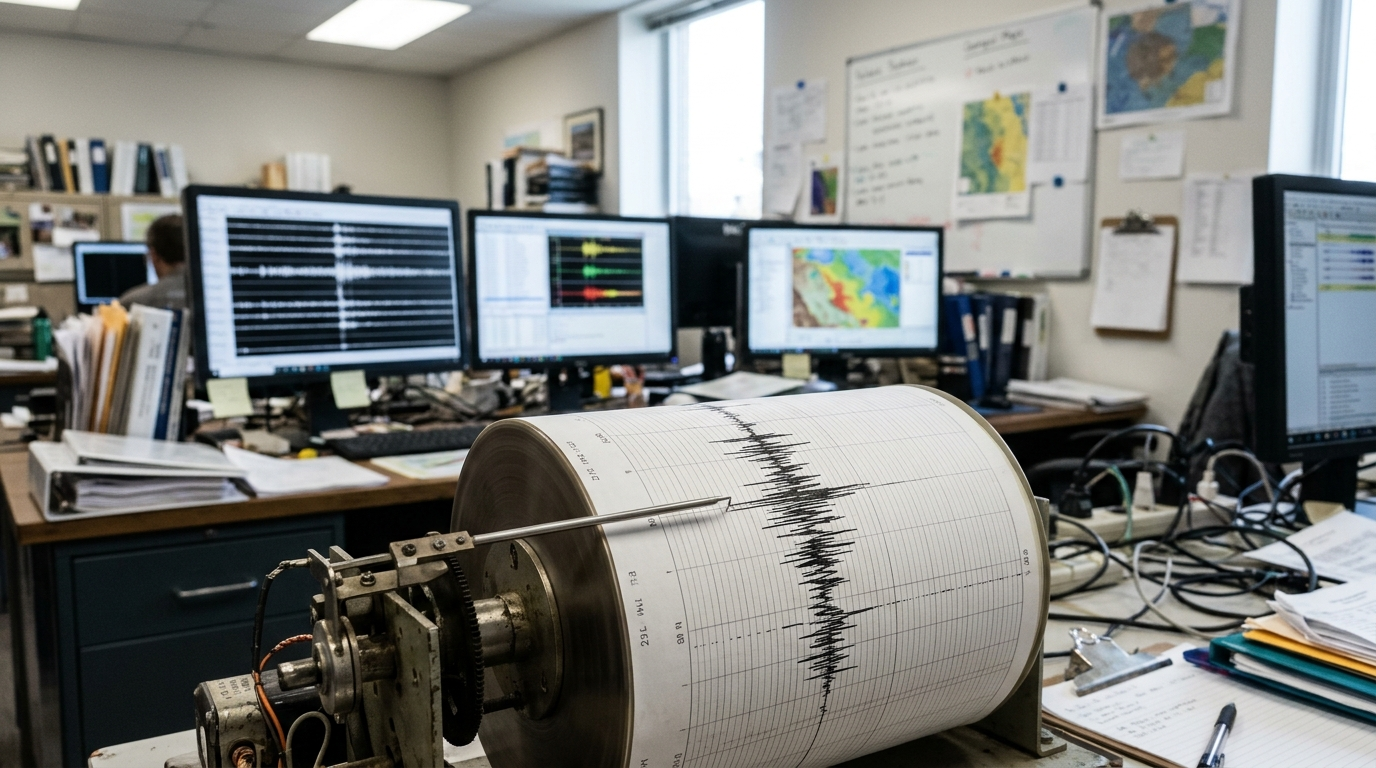
Scientists detect, locate and analyze earthquakes using networks of sensitive instruments called seismometers (or seismographs). By comparing the arrival time gap between fast P‑waves and slower S‑waves at three or more monitoring stations, computers triangulate an earthquakes epicenter and depth within seconds.
Richter Scale vs. Moment Magnitude Scale (Mw)
Most people still refer to the Richter Scale, invented by Charles Richter in 1935. However, the original Richter scale was calibrated specifically for local earthquakes in Southern California and tends to "saturate" (underestimate) giant quakes above magnitude 7.0.
Today, the USGS and global geological agencies use the Moment Magnitude Scale (Mw). Of relying on a single needle spike, it calculates the total physical energy released based on the area of the fault that ruptured, the distance the rock slipped and the rigidity of the crust.
Understanding the Logarithmic Jump
Magnitude scales are logarithmic, not linear. Each full 1.0 increase in magnitude equals 10 times larger wave amplitude on a seismogram and 31.6 times (approx. 32X) more energy released. That means a magnitude 8.0 earthquake releases about 1,000 times energy than a magnitude 6.0 earthquake and 32,000 times more energy than a magnitude 5.0 tremor.
Magnitude vs. Intensity: Why Equal Quakes Cause Damage
An earthquake has one magnitude, which is the total energy at the source, but an earthquake produces many different levels of intensity depending on where you are standing. Intensity is measured using the Modified Mercalli Intensity (MMI) Scale, which ranges from numeral I (not felt) to XII (total destruction). A magnitude 6.5 earthquake occurring underground in a sparsely populated desert may cause zero casualties, whereas the exact same magnitude 6.5 earthquake striking shallowly beneath a densely populated city with unreinforced brick buildings and soft alluvial soil can be catastrophic. I think this shows how complex earthquakes can be.
| Magnitude (Mw) | Class | Estimated Annual Global Frequency | Typical Ground Effects & Structural Impact |
|---|---|---|---|
| Below 3.0 | Micro | Hundreds of thousands | Virtually never felt by people; local seismometers record them all the time. |
| 3.0 – 3.9 | Minor | ~100,000+ | Felt indoors by people at rest, to a heavy truck passing nearby; no damage. |
| 4.0 – 4.9 | Light | ~10,000 – 15,000 | Noticeable shaking indoors, rattling doors and dishes, swinging lamps; minimal damage. |
| 5.0 – 5.9 | Moderate | ~1,000 – 1,500 | Felt by everyone; can crack plaster, topple shelves and damage poorly built masonry structures. |
| 6.0 – 6.9 | Strong | ~100 – 150 | Destructive in areas up to 100+ km across; collapses weak buildings and disrupts power/water lines. |
| 7.0 – 7.9 | Major | ~10 – 20 | Widespread severe damage over regions; buckled highways, fallen bridges and major urban casualties. |
| 8.0 – 8.9 | Great | ~1 per year | Devastating destruction across hundreds of kilometers; coastal/undersea events often generate destructive tsunamis. |
| 9.0 and above | Mega-Quake | 1–3 per century | Near-total devastation near the fault zone; physically shifts coastlines and measurably alters Earths rotation by microseconds. |
4. Global Earthquake Hotspots & Indias Seismic Zones
Earthquakes do not occur randomly across the globe—they cluster tightly along three tectonic belts:
- The Circum-Pacific Belt ("Ring of Fire"): A massive 40,000-kilometer horseshoe rimming the Pacific Ocean—covering Chile, Peru, Mexico, California, Alaska, Japan, Taiwan, the Philippines, Indonesia and New Zealand. 81% Of the worlds largest earthquakes and 75% of active volcanoes are concentrated here.
- The Alpide Belt: Stretching from Java and Sumatra through the Himalayas, Iran, Turkey and across the Mediterranean into Southern Europe. This belt accounts for 17% of the planets largest earthquakes, including some of the deadliest continental quakes in human history.
- The Mid-Atlantic Ridge: An underwater divergent boundary running down the center of the Atlantic Ocean, far from populated land except where it surfaces in Iceland.
Earthquake Risk Across India (BIS Seismic Zoning)
59% of Indias landmass is prone to moderate-to-very-high seismic shaking because the Indian Tectonic Plate continues to drive northward into the Eurasian Plate at approximately 4–5 cm per year. Under the Bureau of Indian Standards (BIS) seismic zoning map, India is divided into four hazard zones (Zone I was merged into Zone II):
- Zone V (Very High Damage Risk): Entire Northeast India (Assam, Manipur, Meghalaya, Nagaland, Arunachal Pradesh), parts of Jammu & Kashmir, Ladakh, Himachal Pradesh, Uttarakhand, northern Bihar, the Rann of Kutch (Gujarat) and the Andaman & Nicobar Islands.
- Zone IV (High Damage Risk): Delhi-NCR, remaining parts of Jammu & Kashmir and Himachal Pradesh, Sikkim, northern Uttar Pradesh, Bihar, West Bengal and parts of Maharashtra (including the Koyna-Patan region).
- Zone III (Moderate Damage Risk): metropolitan hubs including Mumbai, Pune, Kolkata, Chennai, Ahmedabad, Surat, Goa, Kerala and large portions of Uttar Pradesh, Rajasthan and Madhya Pradesh.
- Zone II (Low Damage Risk): interior regions of the Deccan Plateau, including parts of Karnataka, Telangana, central Madhya Pradesh and southern Rajasthan.
5. Deadly Secondary Hazards Triggered by Earthquakes
Surprisingly, ground shaking itself is often the first threat. In historic disasters, secondary cascading hazards caused greater loss of life and property than the initial tremor:
Tsunamis
When a powerful shallow earthquake (typically M 7.5+) ruptures vertically beneath the ocean floor, the earthquake displaces billions of tons of seawater. Out in the ocean, tsunami waves travel as fast as a commercial jet (up to 800 km/h) before towering into destructive walls of water along coastlines.
Soil Liquefaction
Shaking causes water‑saturated sandy or silty soil to lose its solid strength and behave temporarily like liquid quicksand. Entire apartment blocks can tilt sideways. Sink into the ground, while buried fuel tanks and sewer pipes rise to the surface.
Landslides & Avalanches
In regions such as the Himalayas, Nepal or the Andes, seismic shaking destabilizes steep slopes, sending millions of tons of rock and mud crashing onto highways, villages and riverbeds. Sometimes this creates landslide dams that later trigger flash floods.
Urban Fires & Utility Failures
Ruptured natural gas mains combined with downed electrical wires can ignite uncontrollable urban conflagrations. Still, broken water mains often leave firefighters with zero hydrant pressure, as seen after the 1906 San Francisco and 1923 Great Kantō earthquakes.
6. Historys Powerful & Notable Earthquakes
Studying past mega‑quakes has transformed modern engineering codes, tsunami warning centers and emergency preparedness around the world.
| Year | Location / Event | Magnitude (Mw) | Historical Significance & Impact |
|---|---|---|---|
| 1960 | Valdivia, Chile | 9.5 | The strongest earthquake ever recorded by instruments. Earthquake ruptured 1,000 km of fault line and sent destructive tsunami waves all the way to Hawaii, Japan and the Philippines. |
| 1964 | Prince William Sound, Alaska | 9.2 | Earthquake shook for 4.5 minutes, causing massive ground uplift, coastal subsidence and major liquefaction across Anchorage. |
| 2004 | Indian Ocean (Sumatra) | 9.1 – 9.3 | Earthquake triggered one of the deadliest tsunamis in recorded history, claiming over 227,000 lives across 14 countries, including Indonesia, Sri Lanka, India and Thailand. |
| 2011 | Tōhoku, Japan | 9.1 | Earthquake shifted Japans island of Honshu eastward by over 2.4 meters, unleashed tsunami waves exceeding 38 meters and triggered the Fukushima Daiichi nuclear crisis. |
| 2001 | Bhuj, Gujarat (India) | 7.7 | Earthquake struck on Republic Day (January 26), causing severe devastation across Kutch and Ahmedabad and leading to sweeping reforms in Indias disaster management framework (NDMA). |
| 2023 | Southern Turkey & Northern Syria | 7.8 & 7.5 | Earthquake sequence consisted of a devastating doublet, striking just nine hours apart along the East Anatolian Fault, demonstrating the fatal cost of unenforced seismic building codes. |
7. Modern Early Warning Systems & Earthquake-Resistant Engineering
While scientists still cannot predict the date, time and location of an earthquake days in advance, modern technology has achieved the next best breakthrough: Earthquake Early Warning (EEW).
Because harmless P‑waves travel twice as fast as destructive S‑waves—and digital radio signals travel at the speed of light—dense networks of ground sensors detect the initial P‑wave near the epicenter and broadcast automated alerts to smartphones, transit networks and hospitals 5 to 60 seconds before heavy shaking arrives. Systems such as Japans J‑Alert, the US West Coasts ShakeAlert and Googles global Android Earthquake Alerts (which turns millions of smartphones built‑in accelerometers into a seismic network) can automatically brake bullet trains, open fire station doors, shut off gas valves and give people critical seconds to take cover.
How Modern Buildings Survive Shaking
As engineers famously say: "Earthquakes do not kill people; collapsing buildings do." Modern seismic architecture relies on three proven techniques to absorb ground motion without failing:
- Base Isolation: Giant flexible bearings made of rubber, steel and lead are placed between a buildings foundation and its superstructure. During an earthquake, the earth slides back and forth beneath the bearings while the building above remains remarkably steady.
- Tuned Mass Dampers (Pendulums): Skyscrapers such as Taipei 101 suspend multi‑hundred‑ton steel spheres near the top floors. When seismic waves push the tower in one direction, the pendulum swings in the direction to cancel out dangerous sway.
- Ductile Steel Frames & Cross‑Bracing: than using rigid, brittle unreinforced brick or concrete that snaps suddenly, modern codes mandate flexible reinforced concrete and diagonal steel cross‑bracing that bend and dissipate energy safely without collapsing.
8. Complete Earthquake Safety & Survival Guide
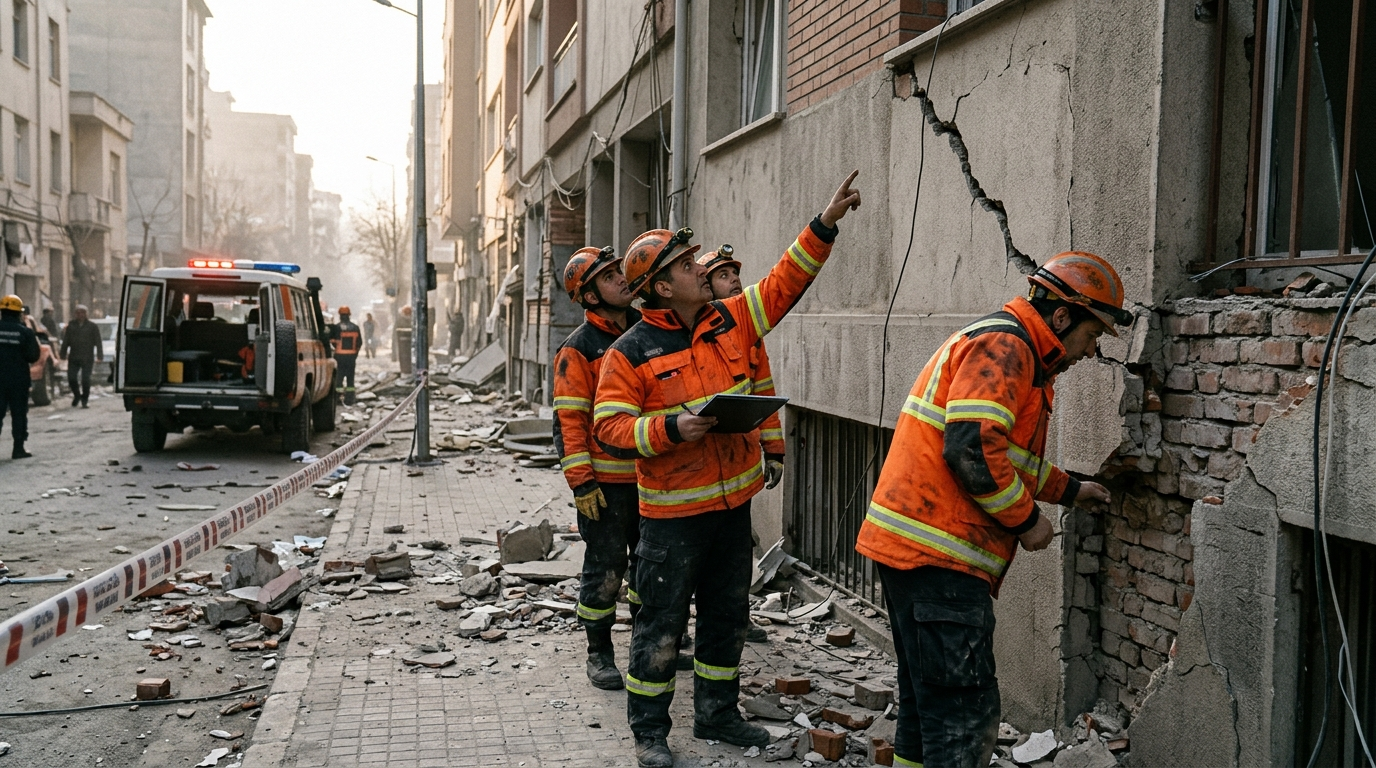
Emergency services are routinely overwhelmed in the 72 hours following a major urban earthquake. Being personally prepared ensures you and your family can act automatically without freezing in panic.
Phase 1: Before an earthquake
- Bolt bookcases, wardrobes, geysers and flat‑screen TVs securely to wall studs.
- Keep items on lower shelves and do not hang heavy mirrors or glass frames directly above beds.
- Learn how to turn off the gas valve, water supply and electrical circuit breaker in your home.
- Set up a family contact person outside the city so everyone knows whom to text if local phone lines clog.
Phase 2: During Shaking
- DROP onto hands and knees before shaking throws you off balance.
- COVER head and neck under a sturdy wooden desk or table or against an interior load‑bearing wall away from glass.
- HOLD ON to your shelter until tremors stop completely.
- Never use elevators and do not sprint down stairs while the building sways.
Phase 3: After Shaking
- Stay alert for aftershocks and be ready to DROP, COVER and HOLD ON again.
- Put on sturdy closed‑toe shoes right away to avoid cuts from broken glass and debris.
- Sniff for gas leaks; if you smell gas or hear hissing, evacuate instantly. Do not flip switches or strike matches.
- Use SMS or messaging apps instead of voice calls so emergency networks stay clear.
Situation‑Specific Survival Rules
- If you are outdoors, move calmly to an open area far from multistory buildings, glass facades, boundary walls, trees, streetlights and overhead power lines. Drop low until shaking ends.
- If you are driving, pull over safely to the side of the road away from flyovers, bridges, tunnels and utility poles. Set the parking brake and stay inside your car; its metal frame gives protection. Avoid driving across cracked roads or bridges
- If you are in bed, stay in bed, turn face down and cover head and neck tightly with a pillow. Many nighttime injuries happen when people jump out of bed barefoot onto glass.
- If you live near the coast, if strong shaking lasts than 20 seconds or if you notice the ocean suddenly receding far from the shore, treat it as a tsunami warning. Evacuate on foot to high ground or inland; do not wait for an official siren.
72‑Hour Earthquake Emergency Go‑Bag Checklist
- Water and food: Minimum 3 liters of drinking water per person per day (a 3‑day supply) plus ready‑to‑eat non‑perishable food such as energy bars, dry fruits and biscuits.
- Power: LED flashlight with extra batteries, a fully charged high‑capacity power bank and charging cables.
- Hygiene: Complete first‑aid kit, a 7‑day supply of essential prescription medicines, N95 dust masks for concrete dust, wet wipes and sanitizer.
- Emergency tools: Loud plastic whistle to signal rescuers if trapped—shouting wastes oxygen and inhaled dust, multi‑tool knife and cash in denominations; ATMs and UPI may fail during blackouts.
- Documents: pouch with photocopies of government IDs, medical records, insurance policies and emergency contact numbers.
9. Common Earthquake Myths Debunked
Myth 1: Standing in a doorway is the place during an earthquake.
Fact: This outdated advice came from unreinforced adobe homes where wooden door frames were the only sturdy feature. In houses and apartments, doorways are no stronger than any other part of the house, offer no protection from flying objects and swinging doors can crush hands or head. Always get under a table instead.
Myth 2: Hot, humid or calm "earthquake weather" signals a quake is coming.
Fact: Statistically, earthquakes occur equally in blizzards, heavy monsoons, scorching heatwaves and mild weather. Tectonic plates rupture kilometers beneath the Earths surface, unaffected by weather above ground.
Myth 3: The "Triangle of Life"—lying next to furniture instead of under it—is safer.
Fact: Major disaster agencies worldwide—including the USGS, Red Cross and NDMA—strongly reject this theory. In earthquakes, buildings do not pancake flat; heavy furniture slides sideways and crushes anyone lying next to it, while ceilings drop plaster and light fixtures. Getting under a table protects you from falling debris and collapsing ceilings far more reliably.
10. Frequently Asked Questions About Earthquakes
Can scientists predict when the next big earthquake will happen?
No. Neither scientists nor animals can reliably predict the date, time and magnitude of an upcoming earthquake. Geologists can only calculate long‑term chances, for example, the percentage chance of a rupture along a known fault over the next 30 years. They can also give early warnings that last only a few seconds once a fault has already begun to break.
Why do small earthquakes happen frequently without causing damage?
Small earthquakes, with magnitudes from 1.0 to 3.9, release a small amount of energy compared to major earthquakes. Because the crust constantly adjusts to local stresses, hundreds of thousands of harmless micro‑earthquakes happen each year. Unfortunately, frequent small earthquakes do not release pressure to stop a giant earthquake. It would take thirty‑two thousand magnitude 5.0 earthquakes to match the energy of one magnitude 8.0 earthquake.
How long does a typical earthquake last?
Moderate earthquakes last only ten to thirty seconds, although the shaking can feel much longer when an emergency is happening. Giant megathrust earthquakes, with magnitudes from 8.5 to 9.5, where hundreds of kilometers of fault move one after another, can keep shaking for three to six continuous minutes.
What should I do if I am trapped under debris after an earthquake?
Stay calm. Conserve energy. Cover your mouth with a cloth or shirt to avoid breathing in dust. Do not light a match or lighter because gas leaks may be present. Instead of shouting all the time, tap rhythmically on metal pipes or walls or blow a whistle in groups of three so that search‑and‑rescue teams can find your location.
Are earthquakes becoming more frequent today than in the past?
According to long‑term USGS records, the average yearly number of earthquakes has stayed remarkably steady over the last century. It only looks like more earthquakes happen today because there are thousands of global seismic stations that detect smaller tremors, instant smartphone alerts and round‑the‑clock social media coverage of events worldwide.
Can an earthquake open a crack in the Earth that swallows people and cars?
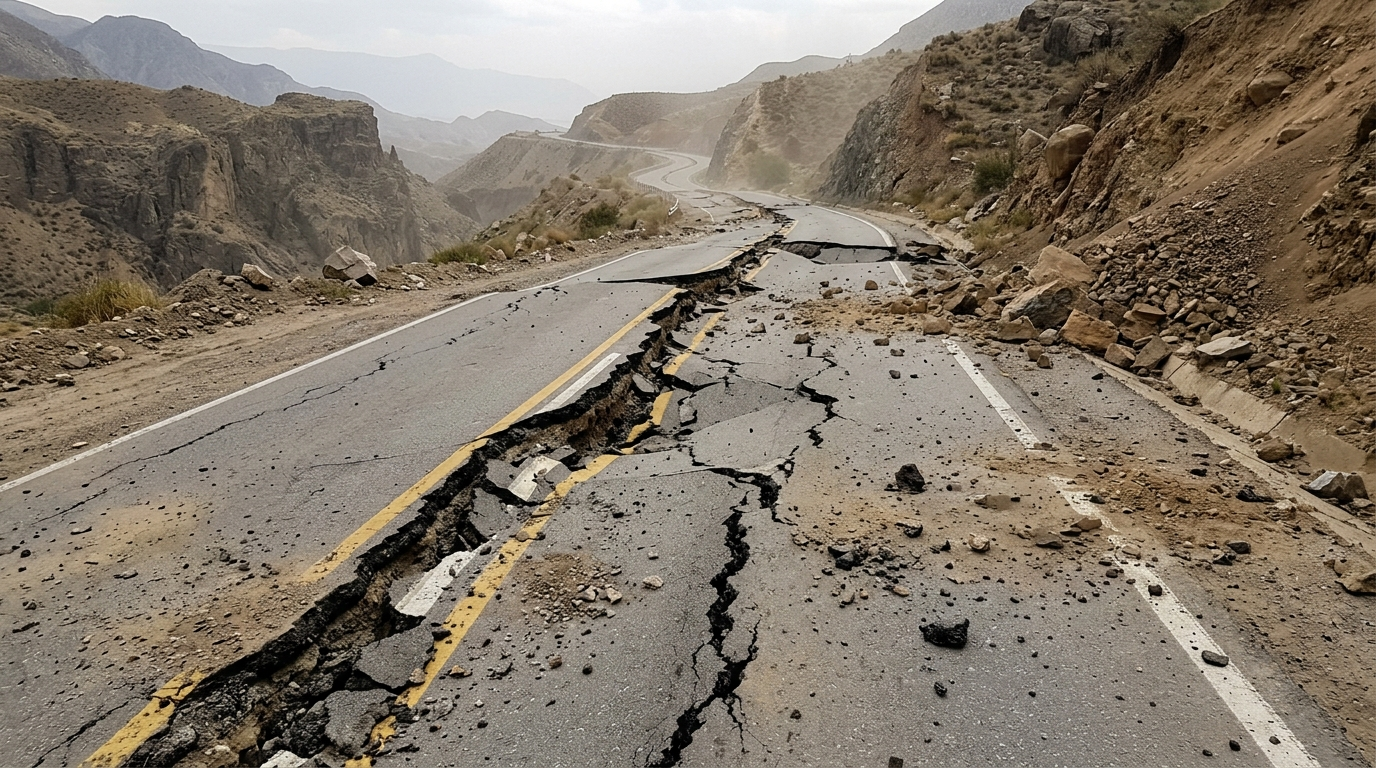
That is a Hollywood movie trope. During an earthquake, shallow cracks and surface fissures a few centimeters to a few meters wide can certainly split paved roads and soft soil, but tectonic faults slide tightly against each other. The Earth does not gape open into chasms and snap shut.
Reader Discussion (0)
Community ForumContribute perspectives, technical analysis, or questions below.